Wednesday, 21 March 2012

Wadi Halfa- part two ( March 10th)

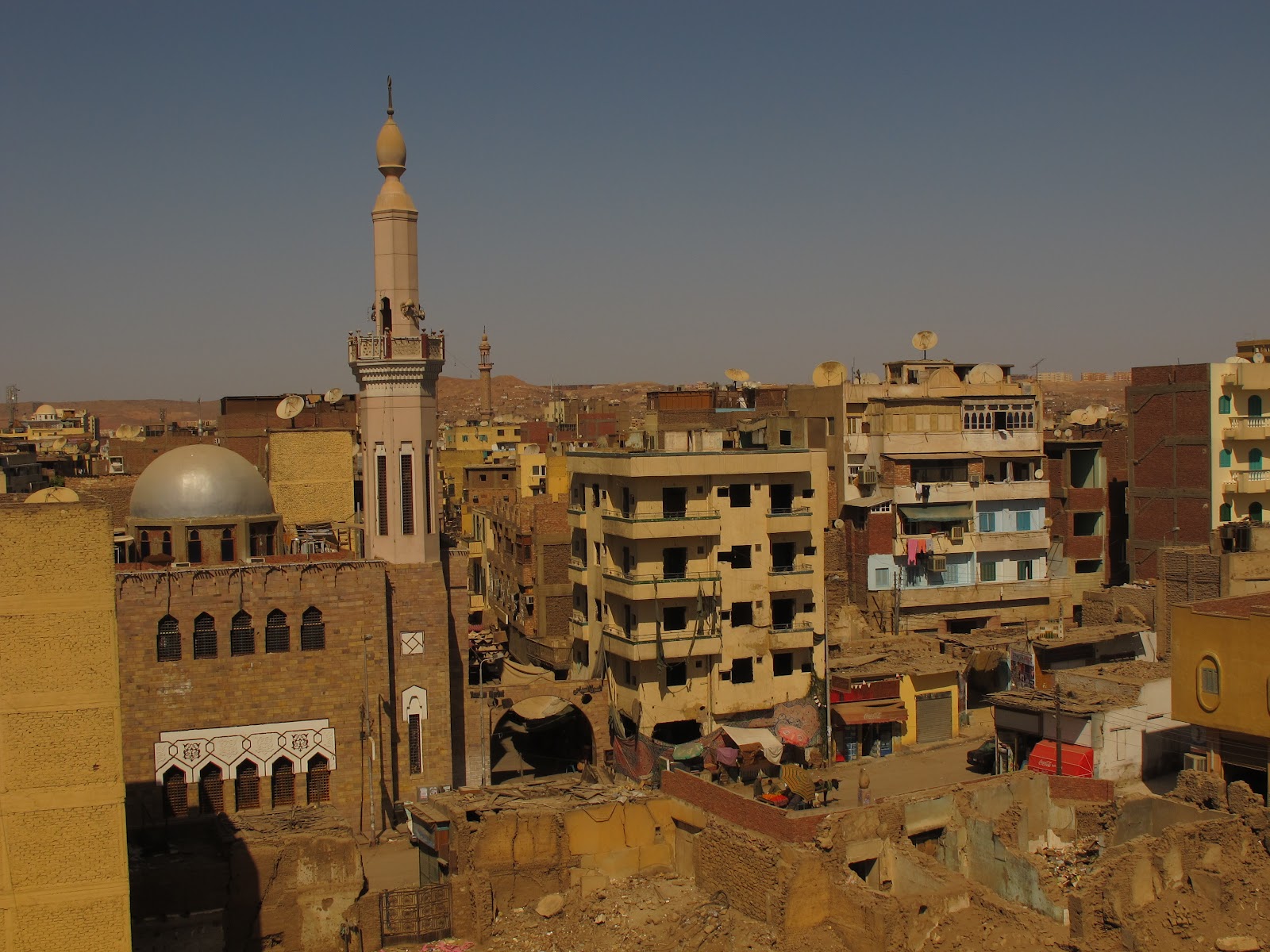
Sudan is quite different to what we were seeing in east Africa. Beautiful mud brick houses,square or rectangular, made you think you were time machined back 500 years.

We don't have too many pictures as Sudan has a strict no pictures law for tourists and in the past they have been stopped and lost cameras or SD cards. Also ...no alcohol ( which was a blow as Shira law rules here.

Lest you get the wrong idea we should tell you that Sudan has the friendliest , most welcoming people we have yet met  As just one example we stopped to fill a propane tank and the attendant said " Welcome to Sudan" and filled it for free. Since Sudan sees so few travelers there are none of the hustling touts or scam artists...nice.

Kitchener's gunboat


We spent a few days in Khartoum which is surprisingly modern; tree lined streets and big beautiful buildings. One of the more dramatic is shaped like a bowling pin..no photo. Visits included the Omdurman souk and the National Museum. The museum includes three temples moved there from the rising water of Lake Nasser. An interesting side bar is that our campground, the Blue Nile Sailing Club, is home to Lord Kitchener's gun boat.


Next was a visit to temple sites quite far into the desert..where we had to use the sand plates to get the truck there and we still aren't too sure how Rogan found them. Further desert driving brought us to the Mero Desert site ( 2 clusters of steep sided pyramids dating back to 600 BC).
The pyramids pretty much had all their tops until an Italian showed up in the late 1800's and preceded to lop off every top looking for treasure. This set up one of our best campsites of the trip ..in the desert on the far side of a sand dune next to the pyramids.


Desert campsite


Our desert adventure continued as we left the north bound road to follow the disused train tracks which cross the desert to Wadi Halfa.  A series of memorable bush camps taught us to keep our tents well zipped; otherwise the wind pumped in steady stream of fine sand.

There is little to say about Wadi Halfa  as we waited for the passenger ferry and to rent a barge for the truck. We can say Wadi Halfa seems to have a soft spot for pro wrestling. Our hotel was about as primitive as you can get with mud walls and reed mats for the roof which let in light and more sand. We like to think of this as a family site so we won't describe the toilets or the shower.


The ferry finally showed up and Sudanese good well evaporated as we elbowed our way through the endless border procedures. This marked our entry into Egypt. Jane had a little adventure when we met Stuart , a young high school teacher from England staying in the same hotel. He had peddled his bike all the way from Cape Town ..and intends to carry on all the way to London. Jane rode the tandem from the village to the ferry.   We spent the night on the deck. This included an evening call to worship with a very agitated imam ; and was followed by the usual sunrise wake-up call.

Good morning on the Lake Nassar ferry - we trust madame had a good night's sleep?


Aswan from our hotel rooftop


We have nothing but good things to say about the excellent Nubian museum in Aswan. Of note is the description of the dislocation caused by the High Dam....a good lead in for a trip highlight- Abu Simbel. UNESCO must be credited with saving this temple from rising waters...an amazing engineering feat. A 3:00 am start and an escorted convoy brought us to the two temples; one dedicated to Nefetari , number one wife, and the other to Ramses himself. Four 20 meter statues greet you. The real treasure are the incised figures that fill the interior walls. many still have the paint that was applied 3500 years ago.  ( sorry , no pictures allowed inside)

Sunday, 4 March 2012

Wadi Halfa -part one

We were three days in Addis which gave us a chance to see quite a lot of the city. Ethiopian food is a different experience-they have something called injera, made from teff  (a local grain), and is the basis for most meals. It is a large thin, rubbery pancake that you tear into pieces and use to scoop up whatever else comes with it. All mid to large towns have plenty of excellent coffee shops, as well as great juice stalls . If you come check out the avocado juice or our favorite - mango. The National Museum houses several exhibits including our great exponent ten grandmother Lucy who is 3.5 million years old. and Selena, a 4.5 million year old bipedal primate. Our wanders took us through one of Addis' shanty towns packed around what once must have been a very pretty stream and gully and is now a black running sewer.


Addis is  city of extremes from crushing poverty to extravagant wealth; from beautiful sleek highrises to mud huts-of course any African city has this but Addis Ababa does it to another level. We spent a morning prowling the streets of the Merkato  known to be Africa's largest market.


A two day drive took us across the Blue Nile river gorge, a staggering 1000 meters deep. We had never heard of it, but is certainly in the Grand Canyon league ...minus the colourful rock. We spent a couple of laid back days at Lake Tana, source of the Blue Nile; and visited some scruffy over rated temples on islands in the lake. Our mornings had a rousing start with the Orthodox Christians starting to chant as early as 4:00 am aided by some pretty good sound equipment.
Around sunrise the Muslims took advantage of even better sound systems. We should mention the Christian Church has been in Ethiopia since the 4th century and mostly evolved with out contact elsewhere.


This sets the stage for our visit to Lalibela, a world heritage jewel. It is a set of 11 Orthodox churches high on a ridge and carved out of rock. They were commissioned by King Lalibela, supposedly inspired by his pilgrimage  to Jerusalem.  Maybe Petra had something to do with it. The site is 900 years old and is astonishing


We have traveled many miles since leaving Central Kenya; the landscape is very dry and rugged. Africa is losing forests at 4 times the rate of any other part of the world ...and it shows. Twenty one countries have a deforestation problem. It is not all depressing as we have seen lots of eucalyptus plantings for erosion control as well as for building adobe homes,scaffolding, firewood and charcoal. These are thickly planted and when cut quickly regrow with several new shoots. The stone terracing also helps with erosion- both are recent programs and are wide spread in Ethiopia.

Downtown Debark - rush hour


We headed for the Simien mountains where a trek awaited our group,complete with pack donkeys,guides and three armed guards....strictly a make work program as two of the guns were WW@ era and almost certainly didn't work. We were told the hike was spectacular , but we didn't make it as Mike was grounded for 3 days with the usual travelers problem. We spent our time in the small town of Debark in a little hotel. Debark is pretty basic and incredibly dusty. From our balcony we watched  steady parade of heavy trucks, horse drawn carts , various livestock and people headed to market where the barter system still prevails.  A group of grade 3 and 4 students carrying new "English for Ethiopia" textbooks escorted us to their village school beautifully set in the hills above the town. Mike recovered and we rejoined our group in Gonder, the royal city. We visited the spectacular castles built by a succession of rulers over 350 years and are now a world heritage site.


After crossing into Sudan we had our first bush camping in quite some time....a beautiful setting in the desert by a lofty kopje. Between the perfect desert breeze, the usual breathtaking display of stars and one of those sunsets...what more could anyone ask??

Monday, 20 February 2012

some catch up photos

OK this is the whale shark on the second pass when Mike got over run by fellow snorkelers.  Photo taken by Lee, a fellow traveler.


Mike at the Nile Special.  Life is good.

We are in Lalibela which deserves a proper entry all on its own.  Cheers to all!

Wednesday, 15 February 2012

Sawa Sawa ( Slowly Slowly)

We are writing this from Addis Ababa, Ethiopia: which is long way from Kigali,where we wrote our last blog!!

It took us two days leaving Kigali to get to Jinja. While less hair raising from our first drive, the scenery remained remarkable: mountains, lush valleys and intricate switch backs.

Jinja is located where the White Nile exits Lake Victoria and Ugandins consider this the source of the Nile. Mike had an incredible two days kayaking the White Nile cataracts. Although the Nile doesn't have the canyon of the Zambezi, the rapids are huge. This adventure marked the end of Mike's wild beard and it was trimmed in celebration of this dream come true.


As for Jane, after a cruise on Lake Victoria she and a traveling friend headed to the local taxi park to catch a matata to Embale. These are minibuses that sit until more than filled and then set off for their destination. Following this was another hour to Baduda where Barbara Wybar runs a vocational school and orphan's program. The afternoon was spent visiting the school, families and village. Three American interns are helping for stages of 3 to 6 months. A long hike back through the dirt roads and banana fields brought us back to Barbara's guest house. A great experience. The following morning we caught up with the truck at the Uganda/Kenya border crossing.

Barbara walking the hills on her way home from school.

Another two days and we arrived at Nakuru National Park where we opted for a game drive. Our group surprised us as we have had many game drives...but we all signed up again. Nakuru is famous for flamingos but there were few as the lake is still too high. In fact it appeared the highlight was to coffee ans desert at the fancy lodge which always welcomes us scruffy as we are. But never judge a game drive by the morning. That afternoon we saw a total of 16 rhinos, including one that appeared to consider ramming our 4 by 4 before opting to amble across our path.


That was the less seen black rhino who browses on bushes and small trees, is sway backed,narrow mouthed and rather ill tempered. We also saw plenty of white rhinos who graze on grass, are wide mouthed, more mellow and are not as big. Leaving the park we came across a lion kill only a few meters off the road but very easy to miss. Relaxing there were two wonderful male lions ...all in all a spectacular day.


It was short drive to Samburu National Park but this time it was less exciting. We did see a are breed of zebra and the "articulating" giraffe.

Our next drive was one of a knd. The road from Samburu north to Marsibit is so bad it is hard to describe ( even Mike is at a loss for words). For long stretches it was better to drive off the road into the scrub land. We climbed and passed the rim of a spectacular volcano complete with a small lake.We bush camped on what looked like a moonscape.


The stretch north of Marsibit was somewhat better but still challenging. Jane, and two others were lucky enough to spot a cheetah; the rest seemed to be shaken into a stupor.  Once across the Ethiopian Border we were surprised to find paved roads; very narrow but paved. The pounding the truck had taken led to a breakdown which pretty much cost us a day and required an unplanned bush camp. The breakdown was near the ruins of an Italian fort guarding the southern approach of Ethiopia.


Finally we reached Konso and stayed at "Strawberry Fields", a training centre for sustainable living/farming as well as a camp.   Hidden in the hills above Konso is an extraordinary tribal village. It has three sets of walls, each added as the village grew and a maze of narrow allies passing family compounds and looking over the valley below. It is like stepping through the looking glass.


Next stop was Lake Abaya known for the US drone base there.  A very long day has brought us to Addis Ababa, an undeveloped sprawling city of four million.We are learning to cope.

We are doing well . . . but may not be in touch for a while as we head north.
Happy Birthday Marion!!

Friday, 27 January 2012

The Killer Turkey Affair


Jane has just beaten off an attack from the Great African Turkey who lives in our Kigali campground with his wife and 7 chicks.


Following our game viewing we were in Nairobi where the unexpected highlight was it's glorious National Museum. We were tipped off by a shop owner on Bishahara Street who gave the recent rebuilding rave reviews. It covers a lot of areas, natural history, Kenyan history, Kenyan modern artists, all beautifully done. Of special note is "Ahmed" the elephant with the perfect tusks who had personal body guards for the last two years of his life. The museum has his mounted skeleton and a beautiful fiber cast.  The exhibit that would rival any museum was the incredible collection of fossilized skulls of early man ranging back as far as 2.7 million years. With this was an outstanding presentation tracing  evolution , ending with a comparison of modern man and primates.

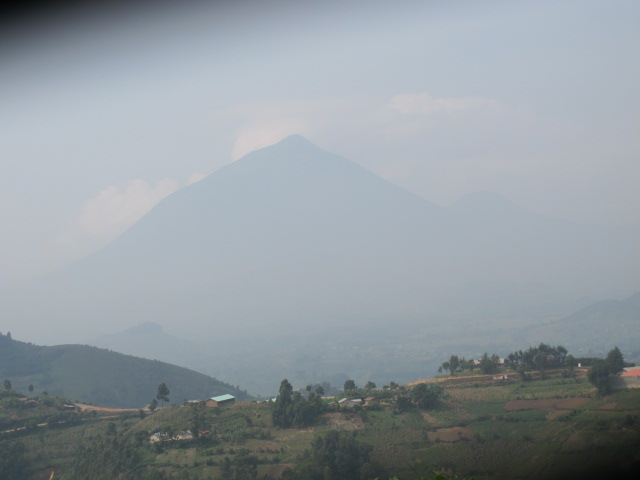
Leaving Nairobi a two day drive was  broken up by an overnight at a quirky campground that was very proud of having hosted Bill Gates. It was scattered down a steep hill with a long tunnel to a spacious bar lounge area. Our drive featured stunning views over the Rift Valley, with a backdrop of  imposing volcanoes just visible through the haze. The valley itself is lush and rolling , with terraced fields wrapped around the hills.


In Kampala we camped at the endearingly named Red Chili; and spent half a day with Hudsonite Katie Corker.who is presently working there with Action Against Hunger. We visited her house and offices followed by lunch at a super restaurant with stunning views over Lake Victoria.


Another two day drive followed ( the first 12 hour marathon starting at 6 am ) which took us over the Rwanda border. Again dramatic switch back roads and mountains, mountains everywhere.


This brings us to the gorilla trek; using permits that we had long before leaving Canada. Our starting point featured a group of local musicians who set the tone- thundering drums and wild dancing. Eight of us were assigned to Francois, a burly older guide who had been tracking gorillas for over 20 years. Each group is allowed to visit one gorilla family for one hour per day. We set off across a potato field and on into a thick sloped bamboo forest. Francois had already shown himself as character with animated growls and actions. He managed to tear strips of bark from a  eucalyptus tree so we could try the tasty fibers beneath.


Diane Fosse was given credit and he pointed out where her grave is. There are only 700 mountain gorillas left, all in this general area which is shared by Rwanda, Uganda and unfortunately the Congo. We were just a few kms from both borders. In less than an hours trek through the jungle we met 4 trackers who had been out early tracking our family. Gorillas build a new nest every night and can move up to 2 kms each day. We scrambled off the narrow track and 10 meters into the bush there they were. We crouched down to view five gorillas sprawled about in a small clearing.


 It soon became apparent there were more as two young tumbled out of the bush. They seemed oblivious to our presence as photo after photo was taken. When they started to amble into the bamboo thicket Francois encouraged us to follow. The young were playing above our heads, showering us at times with twigs and leaves. A brief confrontation between the two silverbacks was quickly settled as the larger , about 450 lbs, established dominance.


We have had such wonderful wildlife experiences, elephants and buffalo outside our tent, lions and their kill three feet away , but this takes us somewhere quite different. There is so much of us in them ...or perhaps it is the other way around.


Our drive to Kigali must be one of the world's great drives. Twisting mountain roads where we perched on the spine of ridge lines, looking down on carefully tended fields 800 meters below. The road is under construction and we often edged past heavy machinery, trusting in Rogan to judge the cms he had to work with.

Much Like Kampala  Kigali is a city of hills. There has been a lot of  recent modern construction. Our campground is run by a non-profit organization that provides prosthetics to genocide victims. The Genocide Centre is a thoughtfully designed building set in beautiful gardens terraced down a hillside. The centre traces the story from colonial times through the horrifying events of 1994 and on to today. Personal stories and artifacts create a deep and lasting impact. They chronicle other genocides of the 20th century, starting with Namibia, through the Armenians, the Holocaust, Cambodia, Bosnia and others. Romeo Daillaire is sympathetically presented, the UN's apology for its' lack of action is noted, and the French are held accountable for their supply of arms and misguided support.

A quiet day in Kigali....we soon start the long road north.

Jane and Mike

Thursday, 19 January 2012

Pictures from Serengeti and Ngorongoro Crater

On the drive in to the Serengeti ......
That's close enough!
Endless plains,endless life.
Looking down from the rim of the Ngorongoro Crater...we had a 5:30 a.m. start.

Sunset from our campground on the rim. Mike is in charge of sunsets, others by Jane. Later this same night a herd of buffalo grazed on the fresh grass around our tents. We could hear the grinding of teeth and more than one were beside and in front of our tent.


Classification: big bird
This baby was waiting and watching for an opportunity to grab a bone.
Masai friend
Masai village
And to end the day ......        


Wednesday, 11 January 2012

Hakuna Matata

Ruaha National Park was our next highlight stop.  The drive in was a rugged test for both our truck and its' occupants!  Breakfast was held in darkness, as our game drive was scheduled for 6:30.  Ruaha is Africa's second largest game park (Selus is first) and it is a jewel.  Mature baobabs are scattered everywhere (and they are very mature indeed - they can be as old as 2000 years - we were told the ones here are a spritely 1000 or younger).


  The hilly surface provided one breathtaking view after another.  22 years ago Jane had a guided walking tour which brought her up close to giraffes, and we were thrilled to see repeated groups as we travelled along.  Some were right by the road and one group had 2 very young calves. For such large animals they move with remarkable grace.


We did very well with lions as well.  First a pride of 6, lazing on an outcropping beside the road, and then a spectacular pride of 15, who were just polishing off the mornings' kill, a young elephant.  Pretty much just some skin and a couple of feet were all that was left.  This group featured 2 magnificent males, while the first had a rather scruffy-looking fellow that we thought was just getting established.  The driver for our group of 5 (and obviously feeling lucky) drove us within a meter of several, it was quite startling staring into a full grown lion's eyes from about 100cm away!


Elephants also featured prominently, occasionaly close enough that they flapped their ears in warning.  We saw group after group, some very close, some decoratively far away. There were lots of quite young so we guess so they seem to be thriving...another difference from our first trip. Mike says they won't miss the one the lions ate for breakfast.


As well kudu, eland, zebra, wildebeest, wild dogs (great ears!), monitor lizards, and a quick view of a family of banded mongoose.  They sit up and gaze at you with an uncomfortable intelligence.

And now?  We are in Zanzibar, that most exotic of islands.  There are some names that just do it all by themselves - Kathmandu, Istanbul, Bali, Marrakesh, and Luang Prabang to name a few. You may remember the tales of our very difficult trip across the Indian Ocean  22 years ago. This trip was entirely different beginning with an air con waiting room and it taking about a quarter of the time. The last trip we shared with perhaps 3 other travellers , where as this time 3/4 of the many passengers were tourists.


The winding, narrow streets of Stone Town, send you straight to med-evil times (but without the stuff thrown in the street). Our first visit we stayed at an old hotel which was very run down and almost deserted ( like much of the town). Jane was very interested in trying to find it again but neither of us could remember where it was , other than it had a view of the ocean. It is now known as Africa House and is a posh hotel where tourists meet for "sundowners". It was great fun to explore it again and easy for us to picture the girls having breakfast there.

 The street market in front of the old Portuguese fort is a serious trip, with the smells sublime. We actually ate there three times, enjoying the fish, the fresh fruit and a Zanzibar specialty a sort of pizza/omlette that is made while you watch.


  The last 2 days we were at Sunset Beach, which is on the north end of the island, and features probably the best coral sand beach and the most turquoise water we have ever seen.  We are back in Stone Town for one more night and tomorrow we begin our trek towards Arusha and the Serengeti.